
Concrete lifting and leveling for residential and commercial properties throughout the Magic Valley
Concrete Leveling in Twin Falls, Idaho
Sunken concrete doesn't always need to be torn out. Find out whether your driveway, sidewalk, patio or other concrete slab can be lifted and stabilized instead.
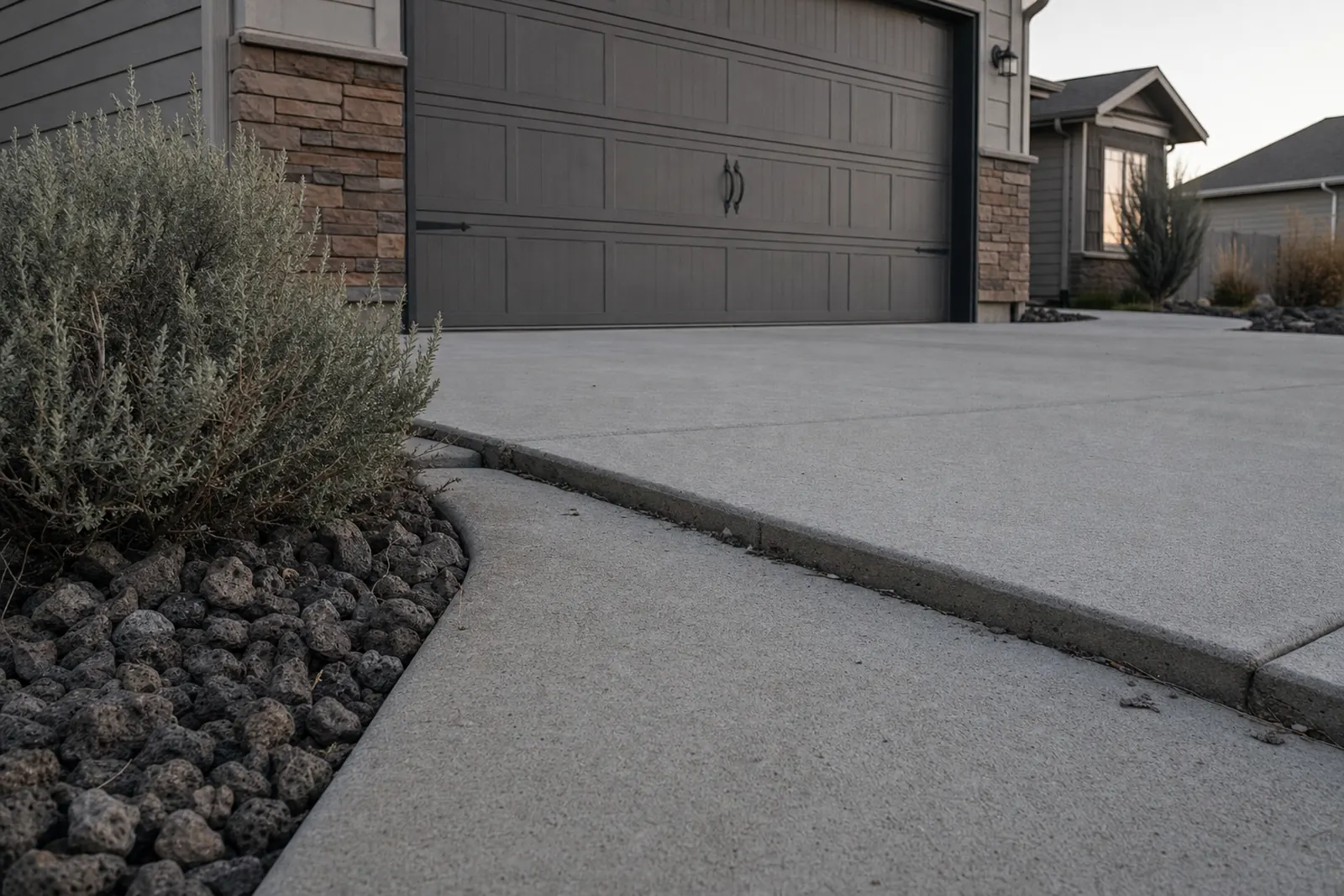
What Is Your Concrete Doing?
Most calls start with something you can see. Pick the one that looks familiar.
-
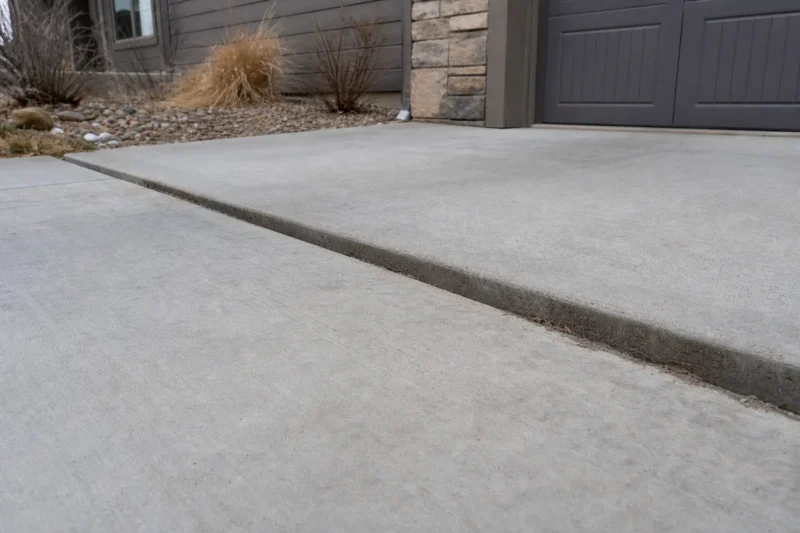
Sunken Driveway
A panel has dropped near the garage or the street, and there's now a lip your tires bump over. Sometimes water sits in the low spot after it rains.
-
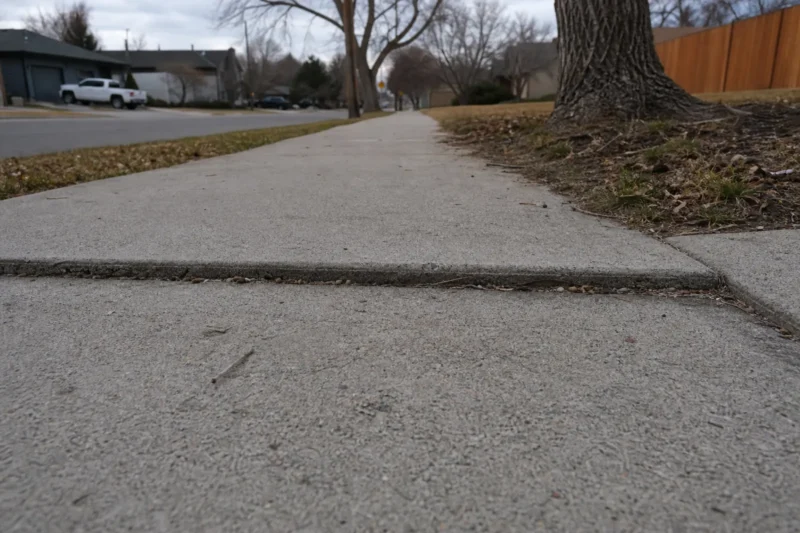
Uneven Sidewalk
One section sits higher than the next. You've caught a toe on it, or you're worried someone else will.
-
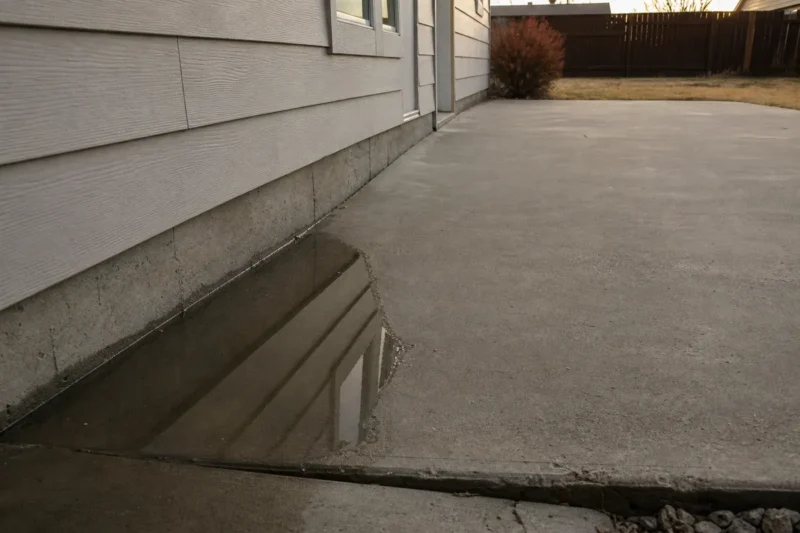
Sinking Patio
The patio has tipped toward the house, pulled away from the foundation, or holds water in one corner.
-
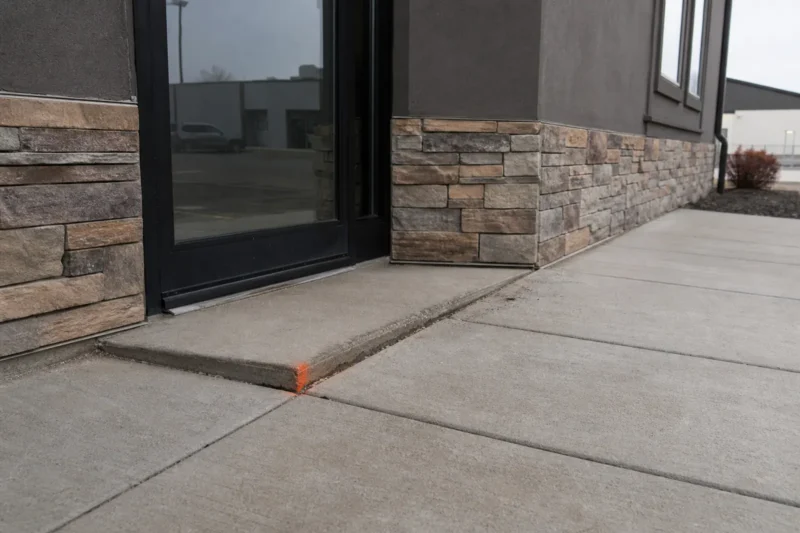
Commercial Property
An uneven walkway at an entrance, a sidewalk a tenant complained about, or a trip hazard flagged on an inspection.
Before you replace it
A Sunken Slab Isn't Automatically a Failed Slab
When concrete drops, most people assume the only fix is to break it out and pour new. Often the concrete itself is still in decent shape. What changed is the ground underneath it.
If the slab is structurally sound, it may be possible to lift it back toward level and fill the empty space below it, so you keep the concrete you already paid for. If it's too broken up for lifting to make sense, we'll tell you that too.
Either way, you get a straight answer before anyone talks about tearing anything out.
What people usually notice first
- A driveway panel that dropped at the garage door
- A lip between sidewalk sections that catches a foot
- A patio tipping toward the house
- Water pooling where it used to drain
- A step or landing pulling away from the porch
- A gap along the edge of a slab
- A slab that sounds hollow when you tap it
- A tenant complaint or inspection note about uneven concrete
Concrete We Lift and Level
If it's an existing slab that has sunk, settled or lost support underneath, it's the kind of work we do.
-
Driveway Leveling
Dropped panels, uneven joints and the low spot that holds water.
-
Garage Apron Leveling
The slab outside the garage door that sank below the garage floor.
-
Sidewalk Leveling
Offset sections and trip lips raised back toward flush.
-
Walkway Leveling
Front walks and paths between the driveway, porch and yard.
-
Patio Leveling
Patios that settled, tipped toward the house or pulled away from it.
-
Concrete Step Leveling
Steps, stoops and landings that sank or separated from the entry.
-
Commercial Concrete Leveling
Entrances, walkways and sidewalks at businesses, apartments and HOAs.
-
Concrete Void Filling
Filling empty space under a slab before it drops any further.
-
Slab Stabilization
Supporting a slab that has moved so it is less likely to keep moving.
Concrete Doesn't Sink on Its Own
A slab rests on soil. When that soil washes out, compresses, or was never compacted well in the first place, the concrete loses support and drops.
Lifting can't change the weather. When water is part of the cause, we'll point out where it's coming from so you can deal with the downspout, sprinkler or grading that started it.
-
Water under the slab
Downspouts, sprinklers, irrigation runoff and snowmelt can carry soil out from under the edges of a slab. Over time that leaves a hollow space the concrete eventually sinks into.
-
Fill that wasn't compacted
The ground next to a foundation or garage is usually backfilled when a house is built. If that fill wasn't compacted well, it can keep settling for years, and the slab on top goes with it.
-
Silty soil and moisture
Fine, silty soils can compact and lose volume when they get saturated. That's why settlement so often shows up right where water collects.
-
Freeze and thaw
Water that gets under a slab and freezes pushes up, then leaves a looser base behind when it thaws. Winter after winter, joints start to shift.
Sunken, Lifted, Level
What concrete lifting does, in three stages.
Sunken
Concrete has settled or lost support.
Lifted
Polyurethane foam is injected beneath the slab.
Level
The slab is raised toward its proper position, and the void space is stabilized.
Look. Lift. Level. Wash down.
How Foam Lifting Works
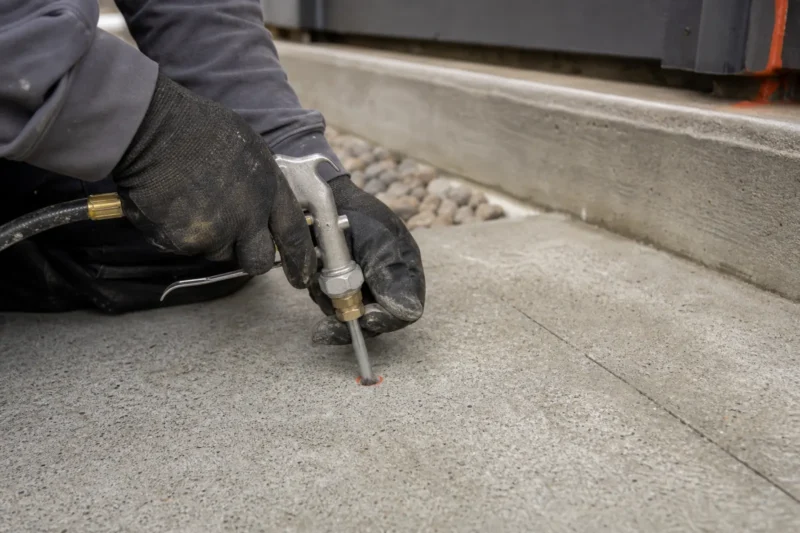
Foam lifting raises a slab from underneath through small holes, without breaking it out. A typical job goes in four steps.
Cured foam weighs a small fraction of what soil or fill weighs, so it adds very little load to ground that already let the slab down.
-
Look
We check how far the slab has dropped, whether it's cracked or broken, what's happening at the joints, and where water has been going. Then we tell you whether it looks like a good candidate for lifting.
-
Lift
Small ports, typically around 5/8 of an inch across, are drilled at planned points. A two-part polyurethane foam is injected beneath the slab and expands into the empty space.
-
Level
The slab rises gradually while we watch the level, and the foam fills the voids underneath so the concrete has support again.
-
Wash down
The ports are patched, and the work area is power washed before we leave. There is no extra charge for the wash down.
Around the House
Most residential work is on the concrete people use every day.
- Driveways and garage aprons
- Front walks and sidewalks
- Patios
- Steps, stoops and landings
- Slabs along the foundation where water collects
The goal is simple: a level surface that drains the right way, keeping the slab you have if it's worth keeping.
Commercial Properties
At a business, uneven concrete is a trip hazard, a likely complaint and a poor first impression at the front door.
- Storefront entrances and walkways
- Apartment and multifamily sidewalks
- HOA common walks and paths
- Sidewalks flagged on an inspection
- Walkways between parking and the building
We can walk the property with you, point out which panels look like good candidates for lifting and which don't, and talk through timing around your tenants and customers.
Lift or replace
Can It Be Lifted, or Does It Need Replacing?
Both are real options, and they compare differently on disruption, time and what they can fix.
| Lifting the existing slab | Tearing out and replacing | |
|---|---|---|
| The slab | Stays in place and is raised from below | Broken out and hauled away |
| Demolition | None | Breaking, removal and disposal |
| New concrete | None | Forms, a new pour and finishing |
| Using it again | Foam cures quickly, so the slab is usually back in use soon after | New concrete has to cure before normal use |
| How it looks | The same concrete, with small patched holes | New concrete that may not match the slabs next to it |
Lifting may make sense when
- The slab is mostly intact, even with a crack or two
- It sank or tipped but hasn't broken apart
- There's a void or soft spot underneath
- You want to keep the concrete you already have
Replacement may make more sense when
- The slab is broken into many small pieces or crumbling
- The surface is badly scaled or flaking apart
- It has heaved up, which lifting can't reverse
- The concrete is failing for reasons lifting won't fix
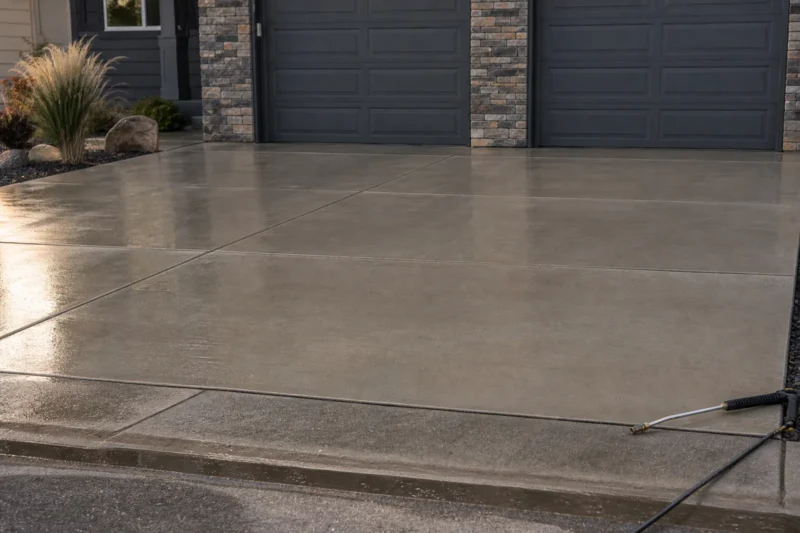
We Finish With a Wash Down
Free power washing after every completed job.
After the lifting is done and the ports are patched, the work area gets power washed. It isn't an add-on you have to ask for, and it isn't something you'll get from every concrete company.
It's a simple extra step. A finished job should look finished.
Why Magic Valley Slab Co.
-
Straight answers
If your slab is a good candidate for lifting, we'll say so. If it's too damaged for lifting to make sense, we'll say that too.
-
One thing, done well
Concrete lifting and leveling is the whole business. You don't need to research repair methods before you call.
-
Free evaluations
We look at the concrete and give you an honest assessment before any work is scheduled.
-
A clean finish
Ports patched and the work area power washed before we leave, on every completed job.
-
Evenings and Saturdays
Open Mon to Sat, 7 AM to 8 PM, so an evaluation can fit around your workday.
Where we work
Serving Twin Falls and the Magic Valley
Magic Valley Slab Co. works in Twin Falls and the towns around it, on both sides of the Snake River Canyon. Don't see your town listed? Call and ask.
Common Questions
Is the concrete evaluation free?
Yes. We look at the concrete, explain what we see, and tell you whether it looks like a good candidate for lifting. There's no charge for the evaluation.
Can every sunken slab be lifted?
No. Lifting works best on slabs that are still mostly intact. Concrete that's broken into many pieces, crumbling, or failing for other reasons may be better off replaced, and we'll tell you if that's the case.
What is polyurethane foam lifting?
It's a way of raising concrete by injecting a two-part expanding foam beneath the slab through small drilled holes. The foam fills the empty space, lifts the slab and hardens in place.
How big are the holes?
Small. They're typically around 5/8 of an inch across and are patched when the work is done. You can find them if you look, but they're far less noticeable than a section of new concrete.
Can cracked concrete be lifted?
Often, yes, as long as the pieces are large and stable. Lifting can bring cracked sections back into line, but it won't make the crack disappear.
How soon can I use the concrete?
Polyurethane foam cures quickly, so in most cases the slab is ready for use soon after the work is finished. We'll tell you when it's ready for foot traffic and vehicles on your job.
Is leveling cheaper than replacing?
It often is, because there's no demolition, hauling or new concrete involved. The cost depends on the size of the slab, how far it has settled and how much empty space is underneath. We'll walk you through those factors when we look at it.
Do you work on commercial properties?
Yes. We lift and level walkways, sidewalks and entrances at businesses, apartment communities and HOA properties.
Free evaluation
Show Us What's Sinking
Tell us what the concrete is doing and where the property is. A few photos help. We'll follow up to set up a free evaluation and give you a straight answer on whether it can be lifted.
Prefer to talk it through?
208-431-6379- Hours
- Monday through Saturday, 7:00 AM to 8:00 PM
Sunday closed - Area
- Twin Falls and the Magic Valley, Idaho